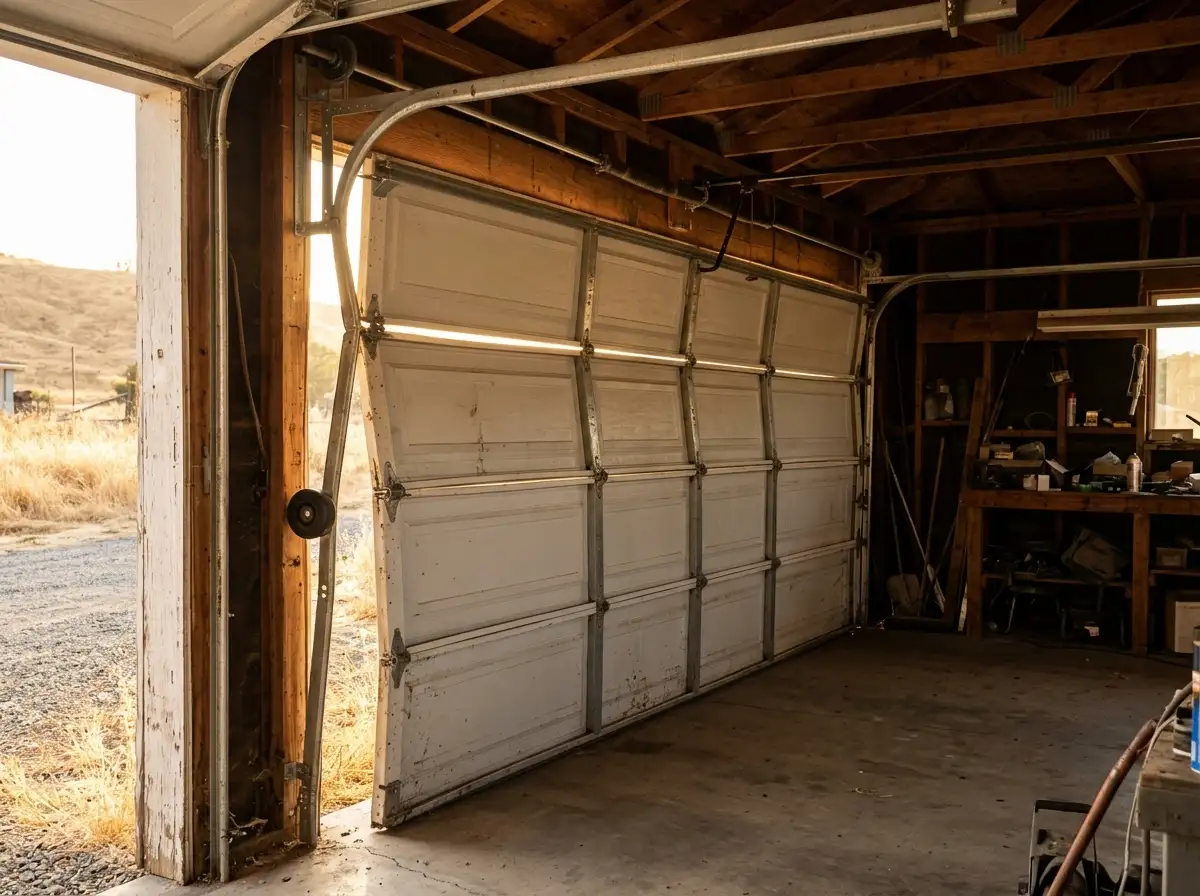
Which side dropped? If one corner of the door sits lower than the other and a loop of wire hangs slack beside it, a lift cable has let go. Garage door cable repair in Sacramento is usually a single visit, and the first job is making the door safe before anything is replaced.
What a failed cable looks like from inside the garage
A door that has lost a cable stops being level, and that is the sign to look for.
- One bottom corner rests on the floor while the other hangs a few inches up.
- The door is wedged at a slant partway open and will not go either way.
- A length of wire hangs loose at one side or lies coiled on the slab.
- At a top corner, the wire is bunched beside the grooved wheel instead of lying in its grooves.
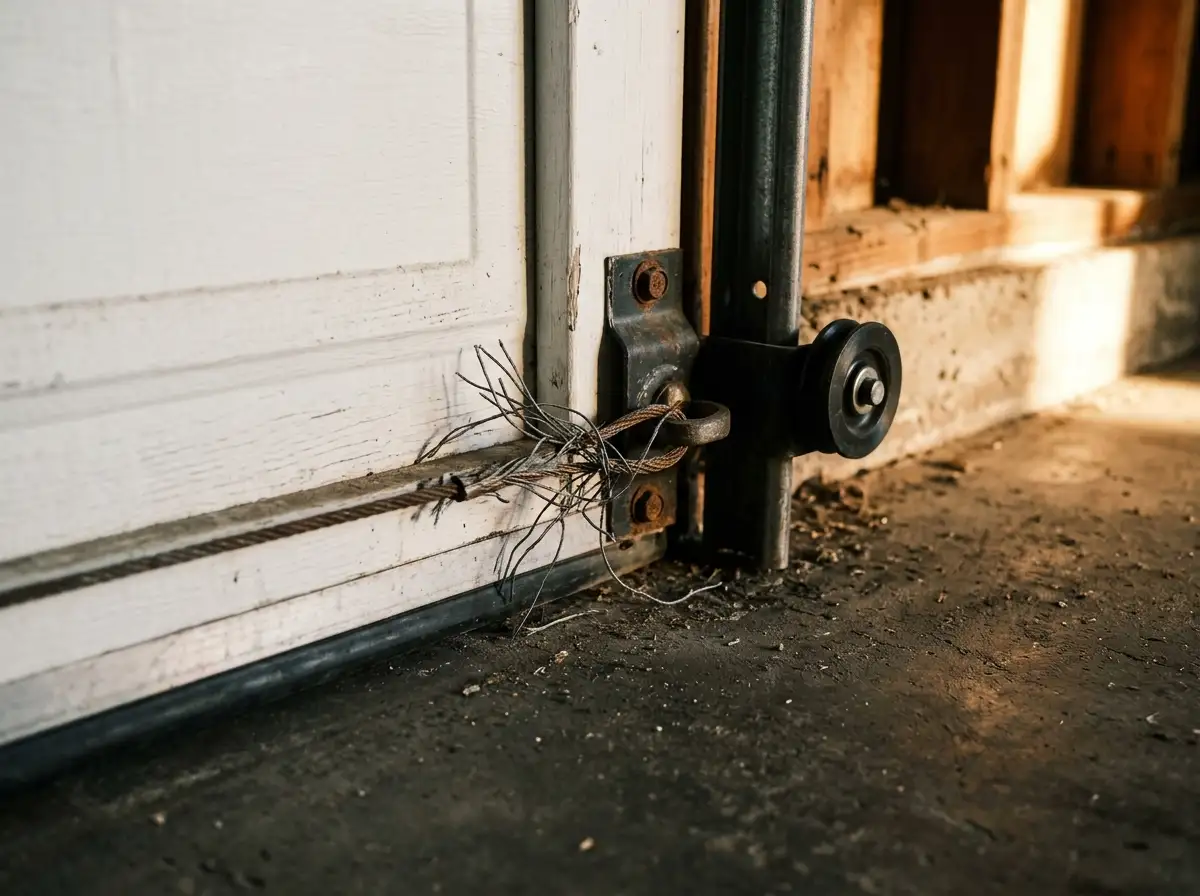
- The door is still level, but the wire near a bottom corner looks fuzzy, with broken strands sticking out.
The last one is the early warning. A frayed cable still works today, and it is the stage just before the other four.
Leave the door exactly where it stopped
The safe thing to do with a crooked door is nothing: no opener, no red cord, no pushing it level.
Keep your hands off the bottom corners. The bracket at each bottom corner is where the cable ends, and it carries the pull of the springs whenever the door is down. Loosening a bolt there lets that force go at hand height. People get hurt here when they only meant to tidy a loose wire.
A door hanging at an angle is being held by one cable and by rollers jammed against the track. Running the opener pulls the high side higher and bends the sections across their width. Keep cars, children and pets out from under it.
If the door stopped open and the house cannot be left like that overnight, say so on the call. The technician secures the door first and deals with the cable second.
What the cables do while the springs do the lifting
The cables are the link between the springs and the door, and without them a spring turns a steel bar and nothing else moves.
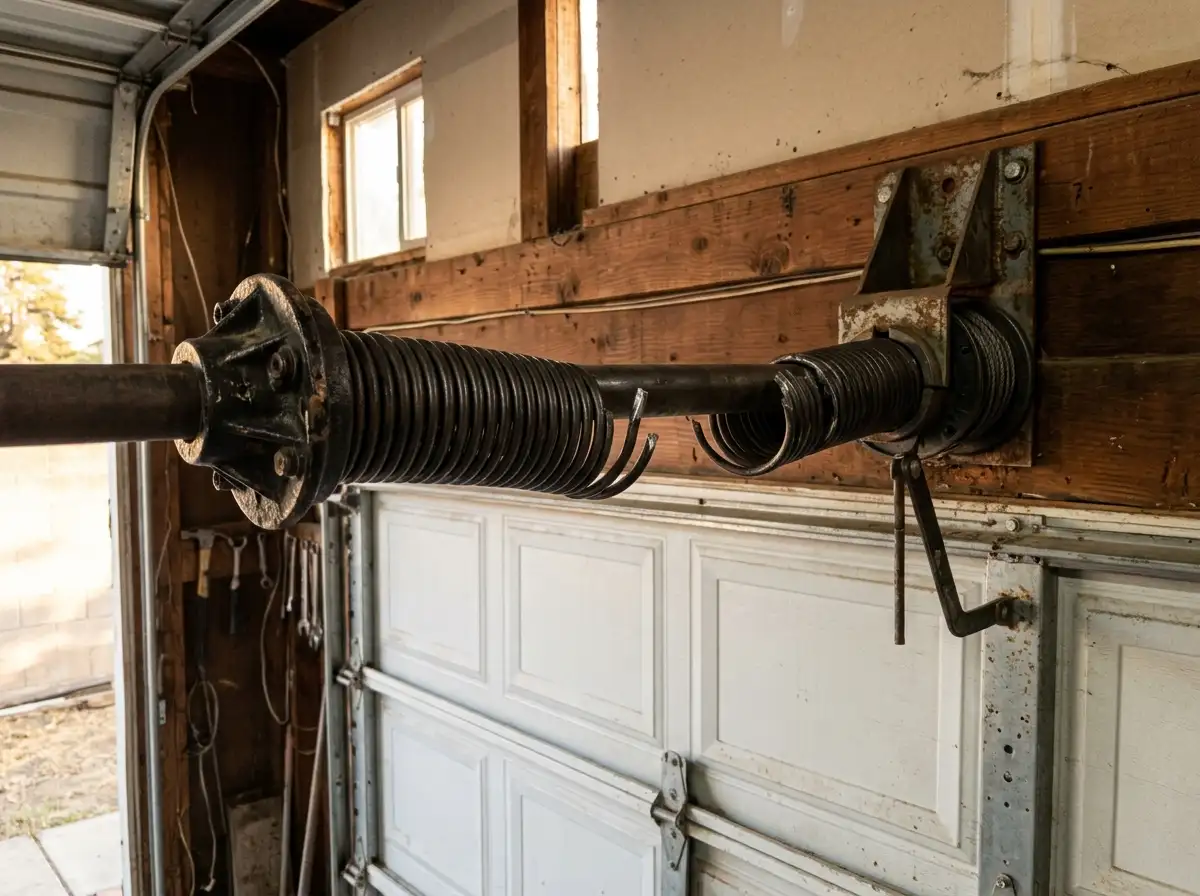
Above the opening a shaft runs the full width of the door with the torsion spring wrapped around it. At each end of the shaft sits a cable drum, the grooved wheel at the top corner. A lift cable, the wire at the side of the door, runs from each drum down to a bracket on the bottom corner.
As the door closes, cable pays out from the drums and turns the shaft, and the turning shaft winds the spring. On the way up the spring turns the shaft back, the drums reel the wire in and the door rises with it. The opener only keeps this moving and decides where it stops.
Two cables share the load evenly, which is what keeps the door level. Doors with extension springs, the long ones beside the horizontal tracks, route the cable over a pulley at the end of each spring instead. Those doors should also have a second, safety cable threaded through each spring so a broken one cannot fly across the garage.
Why the wire gives out at the bottom loop first
Cables fail where they bend tightest and stay wet longest, and both of those are at the bottom corner.
Each cable is a bundle of thin steel strands twisted together. At its lower end it is formed into a loop that slips over a pin on the bottom bracket. Every time the door moves, the strands flex at that loop, and they are the lowest metal on the door, an inch or two above the slab.
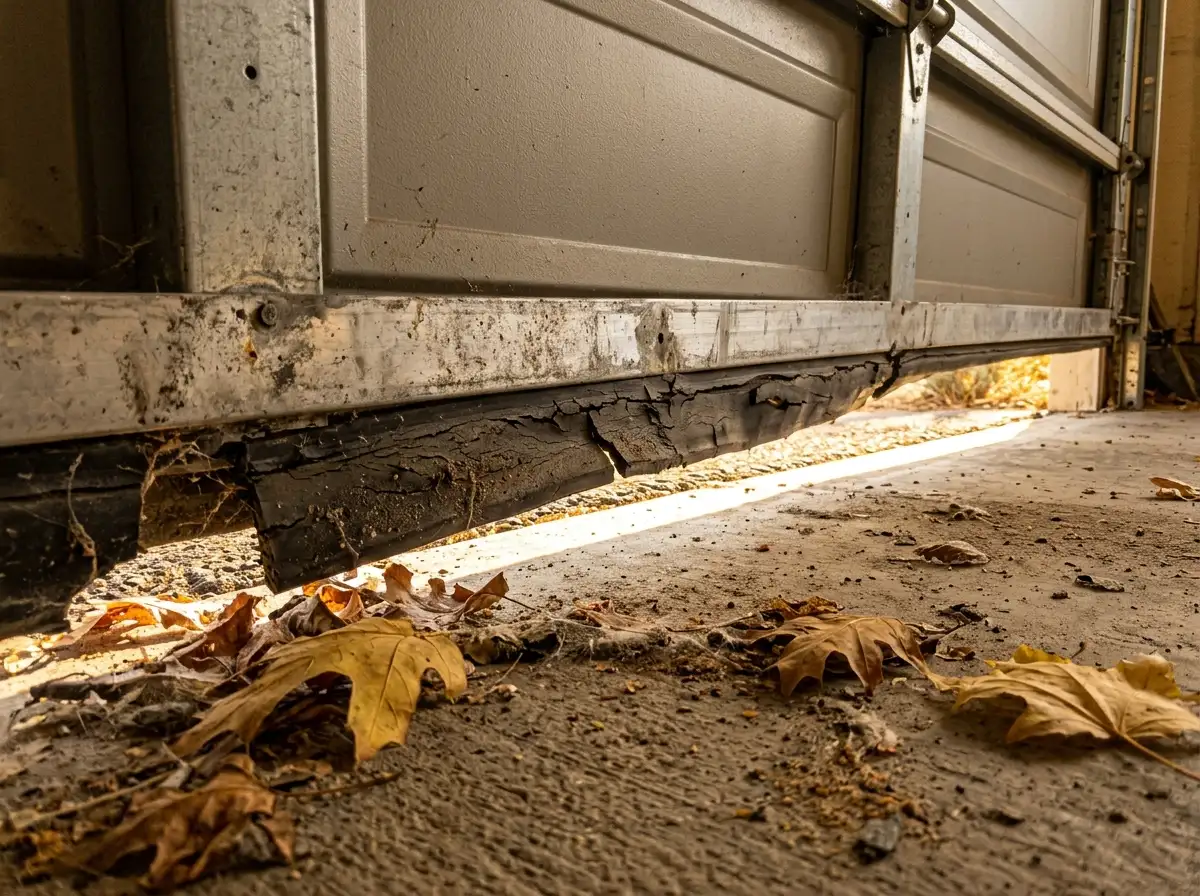
Water that gets under the door sits right there. Rust stiffens the strands, stiff strands crack instead of flexing, and each one that breaks hands its share to the rest.
Wear is not the only route to a loose cable:
- A spring that broke. The shaft goes slack in an instant, the cables lose their tension and one jumps out of its grooves. This is a common history behind a loose cable.
- A door that met something on the way down. One side stops on a bin or a bumper, the other keeps traveling, and the slack side unwraps from its drum.
- A worn drum or pulley. Grooves worn to a sharp edge saw at the wire on every cycle.
Off the drum or snapped: two different repairs
A cable that jumped off its drum can sometimes be reseated, while a snapped or frayed one is always replaced.
| What you see | What it means | What usually follows |
|---|---|---|
| Wire off the drum, strands intact | Slack let it leave the grooves | The cause is found first. A kinked cable is replaced, an undamaged one may be reseated |
| Wire parted, loose end on the floor | The strands wore through, usually at the bottom loop | New cables on both sides, drums and brackets checked |
| Fraying, door still level | The cable is near the end | Replacement booked before it parts |
| Loose wire and a gap in the spring coil | The spring went first | Spring replacement and cables in one visit |
What the technician does, in order
The repair starts by taking the load off the door and ends with the door level and balanced.
- Secures the door. Clamps go on the track and the low side is supported, so nothing can shift during the work.
- Unloads the spring. Nothing at the drums or the bottom brackets is touched until the spring tension has been released with winding bars.
- Finds out why the cable left. The spring, drums, bearings and pulleys are checked, along with the track on the low side, because a cable rarely fails alone.
- Fits new cables. They are matched in length and thickness to the height and weight of the door and seated in the drum grooves.
- Levels the door and resets the spring. Both sides are set to pull evenly before the spring is wound back to the turns the door needs.
- Tests it. With the opener disconnected, the door is raised to about hip height and left alone. It should neither sink nor climb.
Why both cables are changed at once
Both sides are normally replaced together because they are the same age and have to be the same length.
A cable stretches a little over its life. A new one beside a stretched old one leaves the door sitting slightly off level, with one side doing more of the work. The old one has also seen the same damp and the same number of cycles, so it is next in line.
Heavier doors take a thicker cable. If rust at floor level is what finished the last pair, ask whether a stainless cable is made for your door.
What decides the cost of a cable repair
The wire itself is a small part, and the bill is mostly about what else the failure damaged. Fixr, a national cost guide updated in January 2025, puts cable replacement at $100 to $200. HomeGuide’s 2026 guide gives $150 to $350 for cable repair or replacement.
Those are published national ranges. The technician gives you the real figure after looking at the door, and that estimate is free.
What pushes it up:
- A broken spring that has to be replaced in the same visit.
- A bent track or a creased section, if the door was run while crooked.
- Worn drums, pulleys or bottom brackets.
- A tall or heavy door, which takes longer, thicker cable.
- A visit at night or on a weekend.
The guide to garage door repair costs sets these beside other repairs.
How to spot a cable job done badly
A good cable repair is invisible afterward, and a poor one shows within days.
- Daylight under one corner when the door is shut means the two cables were not set to the same length.
- Wire riding over itself on the drum means it was not seated in the grooves and will wear fast.
- One new cable beside one old one saves a little today and usually buys a second visit.
- A door that feels heavier or lighter than before means the spring was rewound by guesswork and nobody ran the balance test.
- A cable that comes off again within weeks means the cause was never found.
If a door that came off its track was part of the story, ask what was done about the track as well.
Keeping the next pair out of trouble
You look after cables by looking at them and by keeping water away from them, never by touching them.
Once a month, with the door closed, glance at the last few inches of wire above each bottom corner. Broken strands, rust or a kink are reasons to call while the door still works. A sound bottom seal keeps rain from pooling at the corners where the loops sit.
Try not to close the door on anything, because a door stopped on one side is how a healthy cable leaves its drum. A yearly tune-up includes a look at the drums and the balance.
Why cables rust from the bottom in Sacramento
Most of the year’s rain here falls between November and April, and that is when cable ends corrode.
December and January add valley fog that can keep the air cold and damp for days at a time, so a wet slab does not dry between storms. On streets where storm drains back up in heavy rain, a garage that takes water at the threshold is where cable loops rust first. Then the long dry summer hides the damage until the door is used hard again.
The same repair is carried out across the area, from Carmichael and Citrus Heights to West Sacramento. If the door is also stuck open, the emergency repair page explains how to secure the house in the meantime.