When did someone last look at it? Not the paint: the springs, the cables and the rollers, with the opener disconnected. If the honest answer is the day it was installed, a garage door tune-up in Sacramento is the visit that finds the worn part before it chooses its own moment to fail.
What a real tune-up includes, in order
A tune-up is an inspection with adjustments, and it ends with a list in your hand.
- Watches and listens to a full cycle. The door runs up and down on the opener while the technician notes where it hesitates, shakes or makes noise.
- Disconnects the opener and tests the balance. This is the most telling check of the visit, explained below.
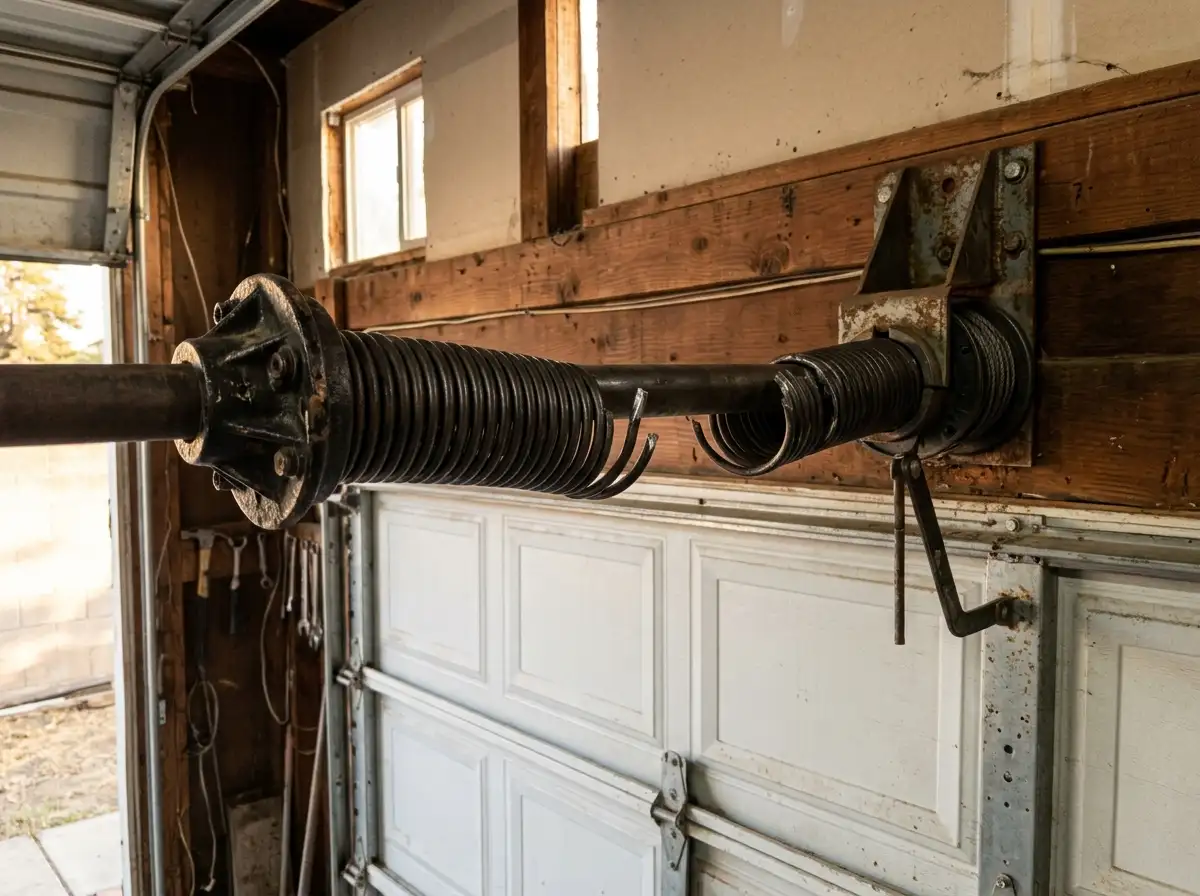
- Inspects the springs and cables. Rust between the coils, stretched or uneven coils, and broken strands at the bottom of each lift cable, the wire at the side of the door.
- Checks rollers, hinges and bearings. Each roller is checked for wobble and flat spots, each hinge for cracks.
- Tightens the hardware and trues the tracks. Hinge and bracket fasteners work loose with vibration. The tracks are checked for plumb, even spacing and dents, then wiped clean.
- Lubricates. Spring coils, roller bearings, hinge pivots and the bearings the spring shaft turns in.
- Tests the opener. Travel limits, closing force, the reversal test on a board, the sensor beam, and the backup battery where there is one.
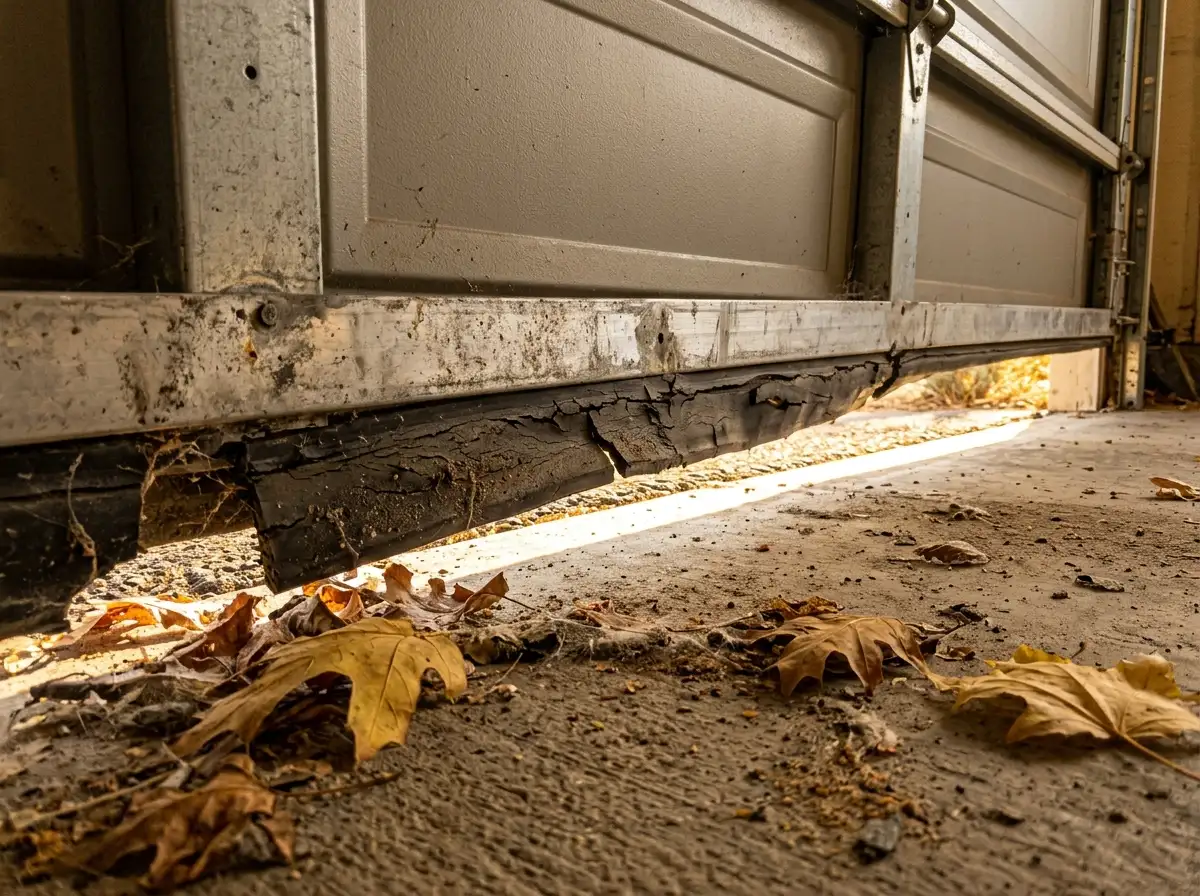
- Looks at the seals. The rubber along the bottom and the strips around the frame.
- Writes down what was found. What is sound, what is wearing and what should not wait. You decide what happens next.
The balance test, and why it comes before everything else
The balance test shows what the springs are carrying, and so what the opener has been carrying for them.
With the opener released, the door hangs on its springs alone. The technician raises it by hand to about the halfway point and takes both hands away. One of three things happens.
It hangs there
The springs match the door. Nothing to adjust.
It sinks
The springs have weakened. The opener has been lifting the difference.
It climbs
The springs are too strong for the door. The opener has to force it shut.
The technician also feels the door near the floor and near the top. A balanced door feels about the same weight all the way, with no point where it suddenly pulls or pushes.
This matters because an opener hides a bad balance very well. It will drag an overweight door for months and give no sign until a gear strips or a spring breaks. Correcting the balance means adjusting spring tension, which is spring work and never a job for a homeowner.
What each noise is telling you
A noise has a location and a cause, and most of them are cheaper to deal with early.
| What you hear | Where it comes from | Usual cause | What settles it |
|---|---|---|---|
| Grinding or rattling the whole way | Along the tracks | Worn steel rollers, dry hinges | New rollers, lubrication |
| A squeal near the top of travel | Above the door | Dry or failing shaft bearings | Lubrication or new bearings |
| A pop at one point | One spot in the track | The door binding, or loose hardware | Track alignment, tightening |
| Slapping from the ceiling | The opener rail | A slack chain | Chain adjustment |
| A rumble in the rooms nearby | The ceiling framing | A chain-drive opener fixed to the joists | A belt-drive opener |
| Shuddering or jerking | The whole door | Flat-spotted rollers or a bent track | Rollers, track repair |
One sound is not on this list. A single loud bang followed by a door that will not lift is a broken spring, and no tune-up applies. Leave the door down.
Rollers: where most of the noise lives
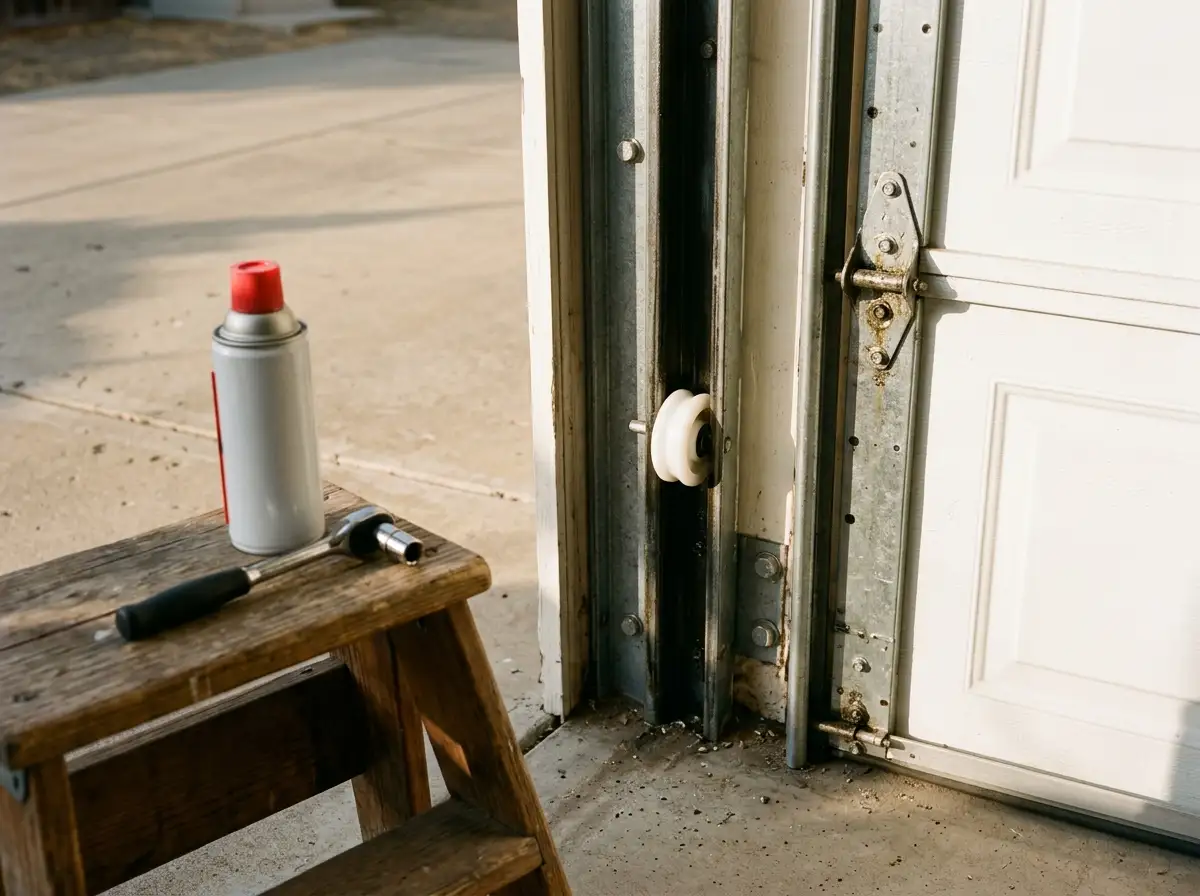
Rollers are the wheels that carry the door along the tracks, and the kind you have decides how the door sounds.
| Type | How it is built | What to expect |
|---|---|---|
| Plain plastic | A plastic wheel turning directly on a steel stem, no bearing | Fitted by many builders. Quiet when new, then the wheel wears and wobbles |
| Steel with ball bearings | A steel wheel on open bearings | Durable and loud. Needs lubricating, and grinds once the bearings wear |
| Sealed nylon | A nylon tire over a sealed ball bearing | The quiet choice. The bearing is closed to dust and needs no attention |
A full set is usually changed together, because rollers of one age wear at one rate. If a roller has already left the track, that is an off-track repair and the door should not be run.
Why the bottom rollers are not a home project. The lowest roller on each side sits in the bottom bracket, the same bracket that anchors the lift cable. That bracket holds the pull of the springs whenever the door is down. Unbolting it to free a roller releases that force into whatever is nearest, usually a hand.
Lubrication: what to use, where it goes and what stays dry
Use a spray made for garage doors, put it on the parts that turn, and keep it off the tracks.
- Roller bearings. Aim where the stem meets the wheel. A nylon tire needs nothing.
- Hinge pivots. A short burst on each pin, then run the door to work it in.
- Spring coils. A light film stops the coils rubbing rust into each other.
- Shaft bearings. At each end of the bar above the door and in the middle.
Two things people get wrong. Standard WD-40 is a cleaner and water displacer, not a lubricant, and it strips what grease was there.
And the tracks are wiped, never greased. Grease in a track collects grit, and the rollers start to slide where they should roll.
The two safety tests to run every month
Both tests take a minute, and a door that fails either should not be run on the opener until it is fixed.
- The board test. Lay a piece of 2x4 flat on the floor in the door’s path and close the door with the opener. When the door touches the wood it must stop and go back up.
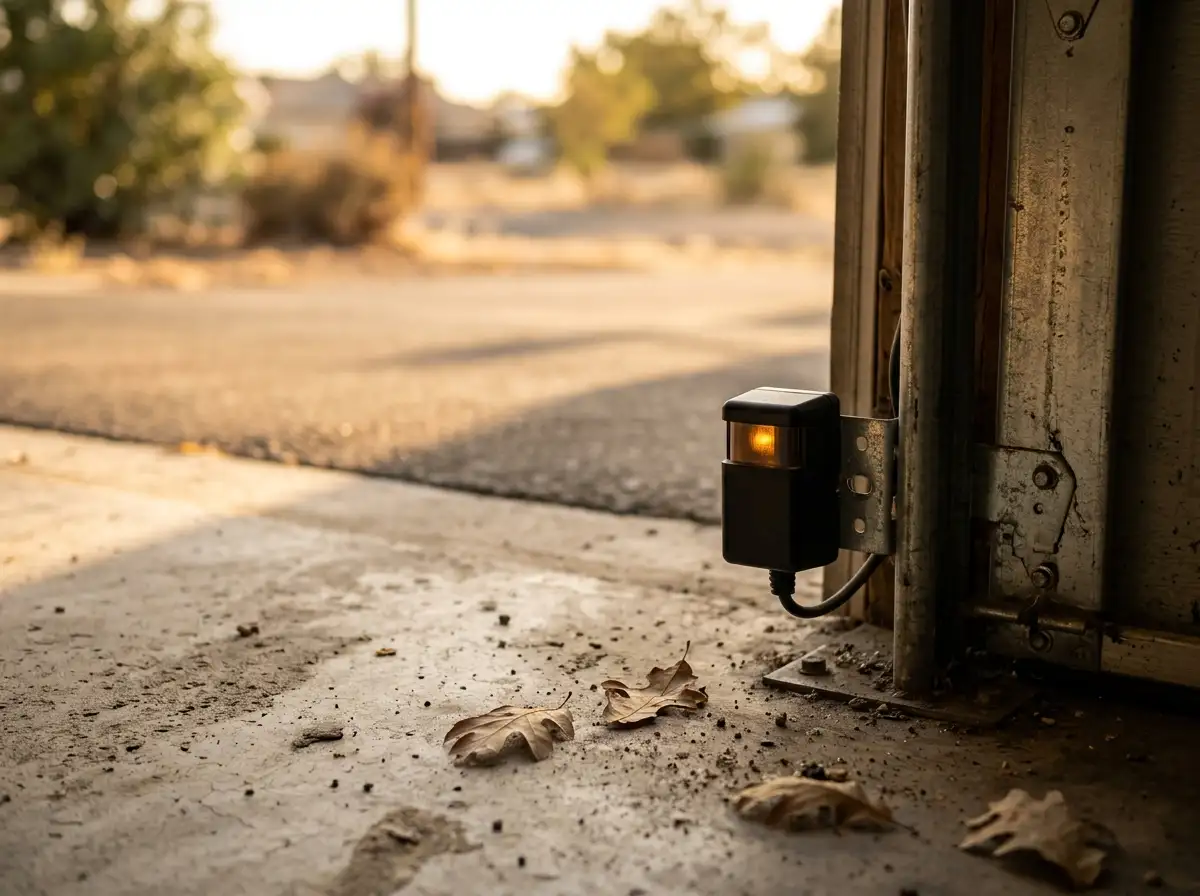
- The beam test. Start the door closing and pass a broom through the opening near the floor. The door must reverse as soon as the beam between the two sensors is broken.
A failed board test is an opener force or travel setting. A failed beam test is a sensor fault. Neither one is something to live with, since these two systems are what stop a closing door from pinning a child or a pet.
A two-season calendar for this climate
Sacramento puts a door through two hard stretches a year, so look at it before each one. Book the technician ahead of one and do your own round ahead of the other.
Before the heat, in May
- About 76 days a year reach 90 degrees or more, and lubricant thins and cooks off. Reapply it.
- Check that the opener runs a full cycle cleanly before the garage turns into an oven.
- Look at the bottom seal while it is still soft enough to judge.
Before the cold and wet, in October or November
- Springs tend to break on cold mornings. Have the balance tested first.
- Fog season damp starts surface rust on springs and cables. Lubricate the coils.
- Clear leaves from the tracks and the sensor lenses.
- Winter wind storms cut power. Have the backup battery and the manual release checked.
What you may do between visits, and what you may not
You may look, listen, clean and lubricate. You may not adjust anything that holds spring tension.
Fine for any homeowner
- Look over the springs, cables and rollers once a month
- Lubricate rollers, hinges and springs twice a year
- Snug up visibly loose nuts on the hinges
- Wipe the sensor lenses and the inside of the tracks
- Run the board test and the beam test
Leave to a technician
- Any adjustment to springs, cables or the drums they wind on
- The brackets at the bottom corners of the door
- Roller replacement
- Straightening a bent track
- A door that hangs crooked: do not run it at all
Do not turn up the opener’s force to get past a sticking point either. That covers the fault and weakens the reversal that protects whatever is under the door.
How to read a low-price tune-up offer
A price far below what the time costs has to be recovered somewhere, usually in what you are told the door needs.
For a sense of scale, HomeGuide’s 2026 national cost guide puts a tune-up at $100 to $250. That is a published range and not our price.
The technician gives you the figure before starting, and it moves with the number of doors, their size and whether any parts are replaced. Our guide to garage door repair costs shows how the common repairs compare.
Before booking any tune-up, from anyone, ask four things:
- Is the balance tested with the opener disconnected?
- Which parts are lubricated, and are fasteners and track alignment checked?
- Will I get a written list of findings before any extra work is offered?
- Is the price for the visit the same whatever is found?
Ask to be shown the wear. A roller that wobbles on its stem, a broken strand on a cable and a door that sinks in the balance test are all things you can see for yourself. Worn rollers are a reason for new rollers. They are not a reason for new springs, cables and drums in one package.
If the door has not been looked at in years, book the visit before the next change of season. It is available across the area, including Roseville, Elk Grove and Rocklin.