Are you replacing a door that is damaged, or one you have simply had enough of? The answer changes the conversation. A damaged door is about getting the opening closed and secure again, and a tired one is about heat, noise and how the house looks from the street.
Either way, garage door installation in Sacramento begins with a tape measure and a handful of choices. This page sets those choices out.
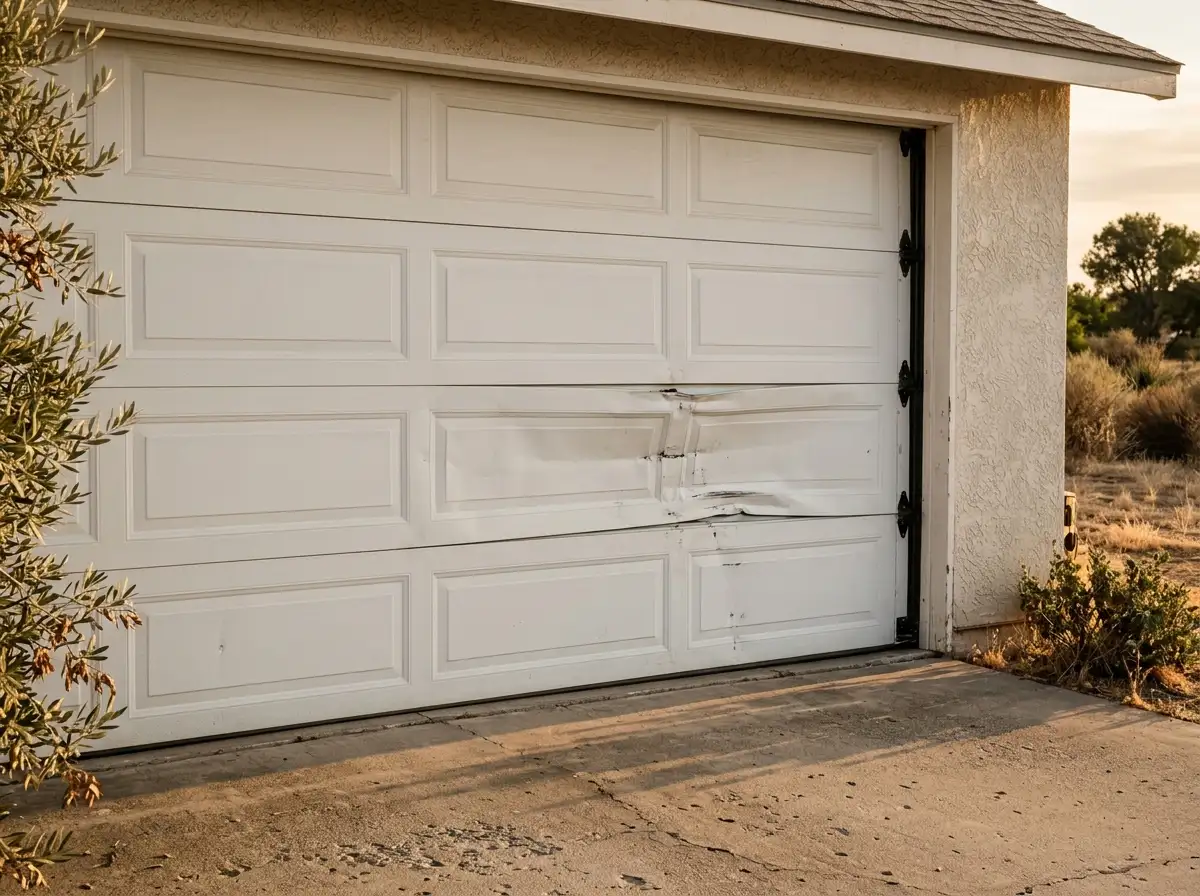
When a new door beats another repair
Most doors with one failed part should be repaired. A new door makes sense when the door itself, the sections and their frame, has stopped being sound.
- Two or more sections are dented, cracked or bowed.
- Steel is rusting through along the bottom edge, or wood is soft with rot.
- The model is no longer made, so a matching section cannot be had.
- It is an old one-piece door and the hardware that swings it is worn.
- The garage is too hot or too loud, and the door is a bare sheet of steel.
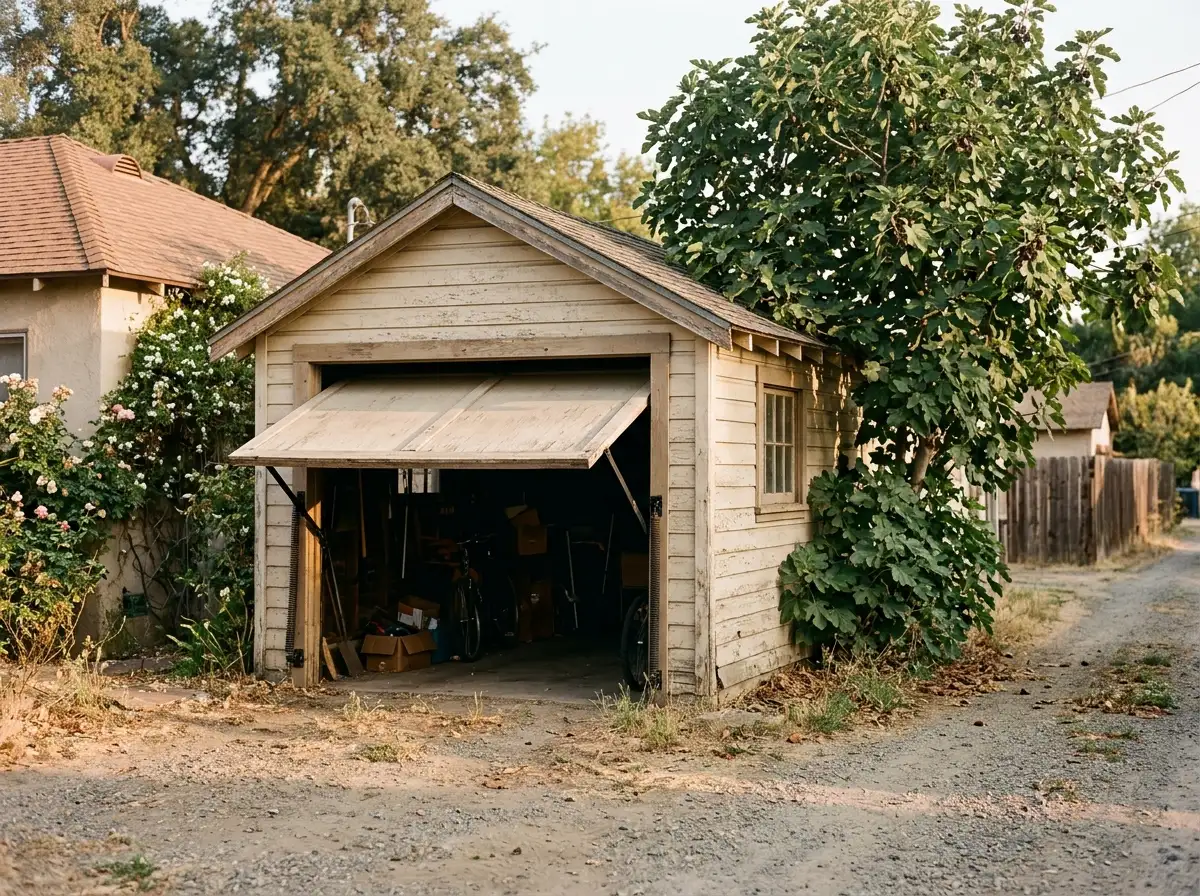
If only one section is hurt, start with the panel replacement page. If yours is a single slab that swings outward, the tilt-up door page covers repairing it against converting it.
What the door is made of
Material decides weight, upkeep and how the door stands up to sun and damp. Four families cover nearly every house.
| Material | What it is like to own | Who it suits |
|---|---|---|
| Steel | Low upkeep, widest choice. Thin steel dents easily, and with gauge numbers the lower figure is the thicker sheet | Most homes |
| Wood | Heavy and handsome. Needs refinishing, and needs larger springs to carry it | Older houses where the door is part of the architecture |
| Composite or faux-wood overlay | The look of wood on a steel or fiberboard core, with far less upkeep | People who want the look without the maintenance |
| Aluminum and glass | Light, modern, lets daylight in. Dents more readily and insulates less | Contemporary houses, garages used as workrooms |
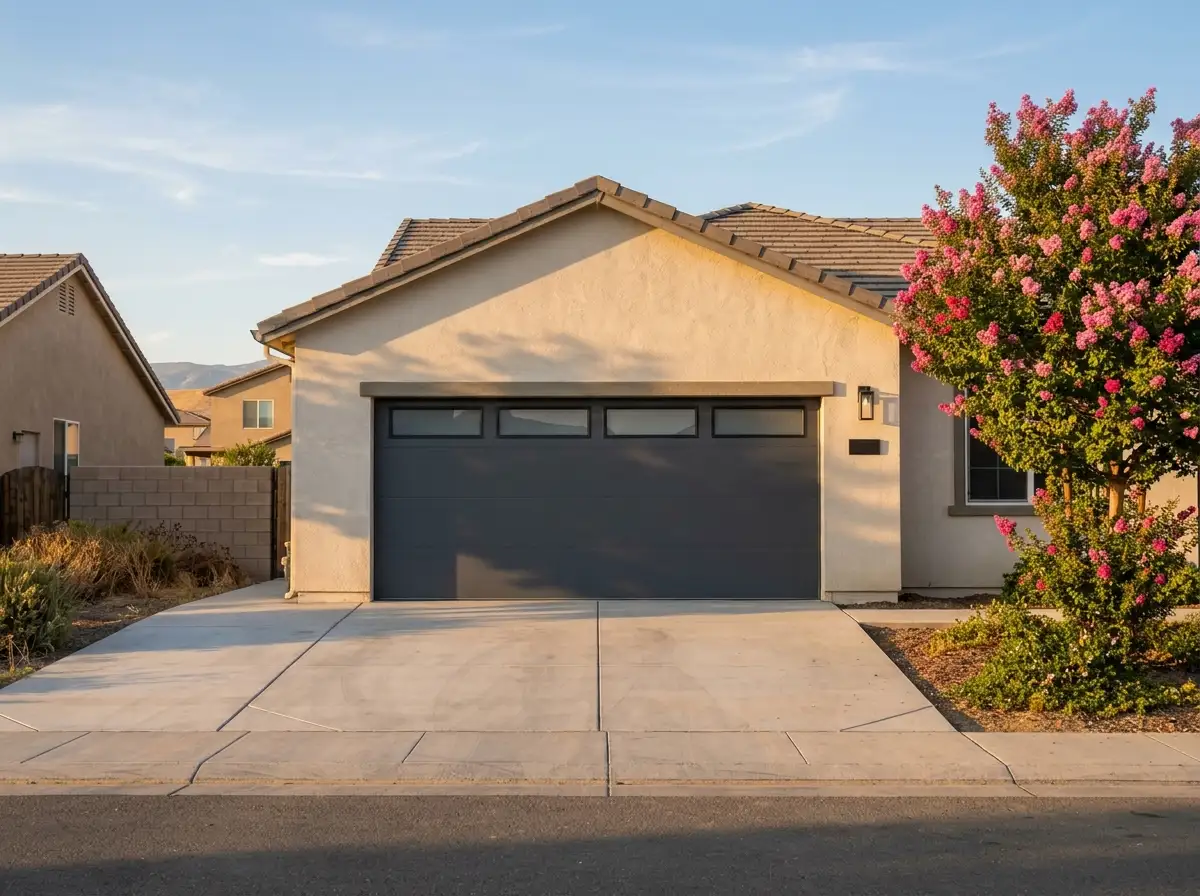
Windows across the top section bring light into the garage and change the face of the house more than any color will. Frosted or high-set glass keeps the contents out of view.
One layer, two or three: how the sections are built
The number of layers in a section matters more to daily life than the material on its face.
A single-layer door is one steel skin. It is light and inexpensive, it rings when it moves and it passes heat straight through.
A two-layer door adds a board of insulation behind the skin with a thin backing. A three-layer door sandwiches the insulation between two sheets of steel, and that makes it stiff and quiet.
The insulation is either polystyrene board or polyurethane foam injected between the skins. Polyurethane insulates better for the same thickness and bonds the section into one rigid piece. Each manufacturer measures R-value its own way, so compare numbers within one brand and not across two.
Our guide to insulated garage doors in valley heat goes into which garages gain the most.
What gets measured before a door is ordered
A door is ordered to the opening, so the visit starts with five measurements.
Width and height
Single doors are typically 8 or 9 feet wide by 7 high, doubles about 16 by 7. Taller 8-foot doors suit trucks.
Headroom
Standard tracks want about a foot between the top of the opening and the ceiling. Low-headroom hardware exists for less.
Side room
Space beside the opening for the vertical tracks and, on older doors, the spring hardware.
Depth
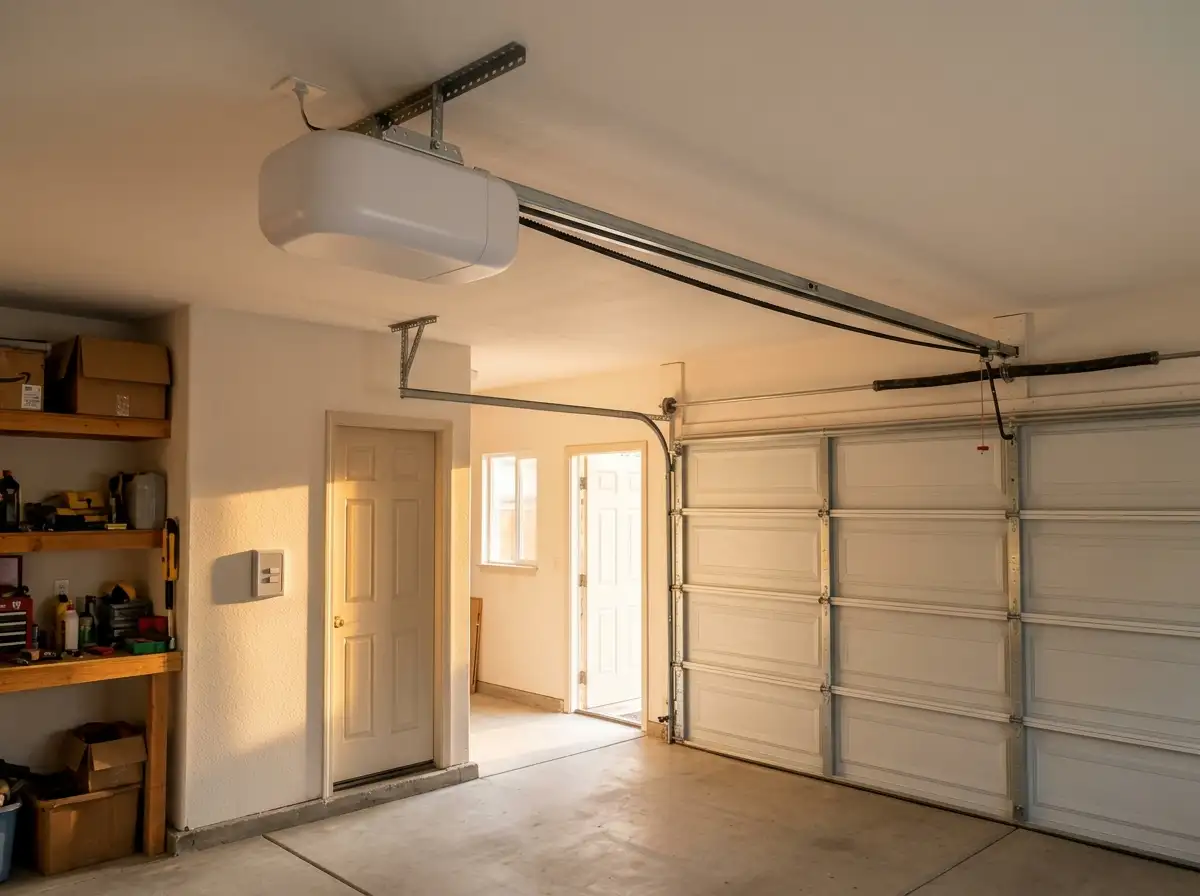
Clear ceiling running back into the garage for the door to lie in when open, plus the opener if there is one.
The technician also looks at the wooden frame around the opening and at the floor. A slab that has settled at one end needs a bottom seal that can take up the gap, and a rotted jamb is replaced before new track is fastened to it.
What installation includes, in order
A new door is a new counterbalance system as much as a new face. The parts you never look at are where the care goes.
- Takes the old door down. Spring tension is released first, then the sections, tracks and old hardware come out.
- Sets the new tracks. Vertical tracks are plumbed to the opening, horizontal tracks leveled and braced to the ceiling framing.
- Stacks the sections. Each one is hinged to the next and fitted with rollers, from the floor upward.
- Fits the springs and cables. The spring is sized to the weight of this door, and the cables are seated on their drums.
- Reinforces the top section. A steel strut and a proper opener bracket stop the opener arm cracking the door over time.
- Seals the perimeter. A bottom seal on the door, vinyl stops down the sides and across the top.
- Balances and tests. With the opener disconnected the door should rest wherever it is left. Then the opener’s limits and its reverse on an obstruction are set.
Ask that removal and haul-away of the old door is written into the quote, so there is no doubt on the day.
How long it takes
Most of the timeline is the wait for the door, and very little of it is the fitting.
Common sizes and colors in steel are often stocked by suppliers. Wood, glass, unusual sizes and special colors are built to order, and the manufacturer sets that lead time.
For a standard sectional door the fitting is normally a single visit. If your present door cannot be closed, say so, and the technician can secure the opening while the new one is on order.
What a new garage door costs
Size and construction set most of the price. HomeGuide’s 2026 national guide puts a new single door at $700 to $2,700 installed and a double at $1,000 to $3,500.
Those are published ranges and not our prices. The technician quotes your door after measuring, and that estimate is free.
What moves the figure within the range:
- Size. A double door, or an 8-foot height.
- Layers and insulation. Three-layer polyurethane sits at the top of the steel range.
- Material. Wood and full-view glass cost more than steel.
- Windows and hardware. Glass, decorative handles and hinges.
- The opening. Low headroom, a rotted frame or a one-piece conversion add work.
- The opener. Whether the existing one may legally stay, which the next section explains.
Rules to check before you order in Sacramento
Three sets of rules can decide which door you are allowed to fit, so check them before paying a deposit.
Historic properties. The city’s register holds nearly 900 landmarks and more than 30 historic districts. For those addresses, City form CDD-0033 exempts a door replacement from review only when the new door matches the original in kind, with no change to the opening or its trim. Anything else needs a Preservation application first.
The Eichler district. In South Land Park Hills, the district plan adopted on May 21, 2024 covers 48 homes built in 1955 and 1956. It says to keep and repair the original vertical-groove garage door cladding where feasible, or otherwise to use “a plain flat-surface door type”. A raised-panel door in a traditional or colonial style is ruled out where it faces the street.
Homeowner associations. Rules vary by community. Sun City Lincoln Hills in Lincoln asks for no application when the replacement is the “same color, type and style as the original door”. The Historic District in Folsom has its own resolution on garage door styles.
If your street has an association, as many newer tracts in Natomas and Elk Grove do, read its rules before you choose a color.
A new door and an old opener. Under California Health and Safety Code section 19892, a replacement door cannot legally be hooked up to an opener with no battery backup. If yours was fitted before July 2019 and has no battery, budget for a new opener at the same time.
On permits, ask the City’s Building Division before work starts. Widening or raising the opening, or running new wiring, changes the answer.
How a door installation goes wrong
Poor installations look fine on the first day and show themselves over the first year.
- Springs taken from stock instead of sized to the door. The door drifts down or creeps up, and the opener wears out early covering the difference.
- No strut on the top section. The opener arm flexes the door on every cycle until the steel creases.
- Tracks out of plumb. Rollers scrub one side, and the door shudders and wears unevenly.
- Old tracks or old springs reused to shave the price.
- No balance test and no reversal test before the installer leaves.
Garage door work falls under the state’s D-28 doors and gates classification, and the Contractors State License Board requires a license once a job reaches $1,000. It is reasonable to ask who is licensed for yours.
Looking after a new door
A new door needs little, and what it needs is regular.
Wash steel with mild soap a couple of times a year, and refinish wood before the surface starts to gray, since a damp, foggy winter finds bare grain quickly. Lubricate the rollers and hinges twice a year and book a tune-up yearly so the balance is checked. Leave the springs, cables and bottom brackets to the technician.
The area pages go further on local questions: El Dorado Hills on heavy doors and the springs sized to them, and Citrus Heights on replacing a 1970s original.