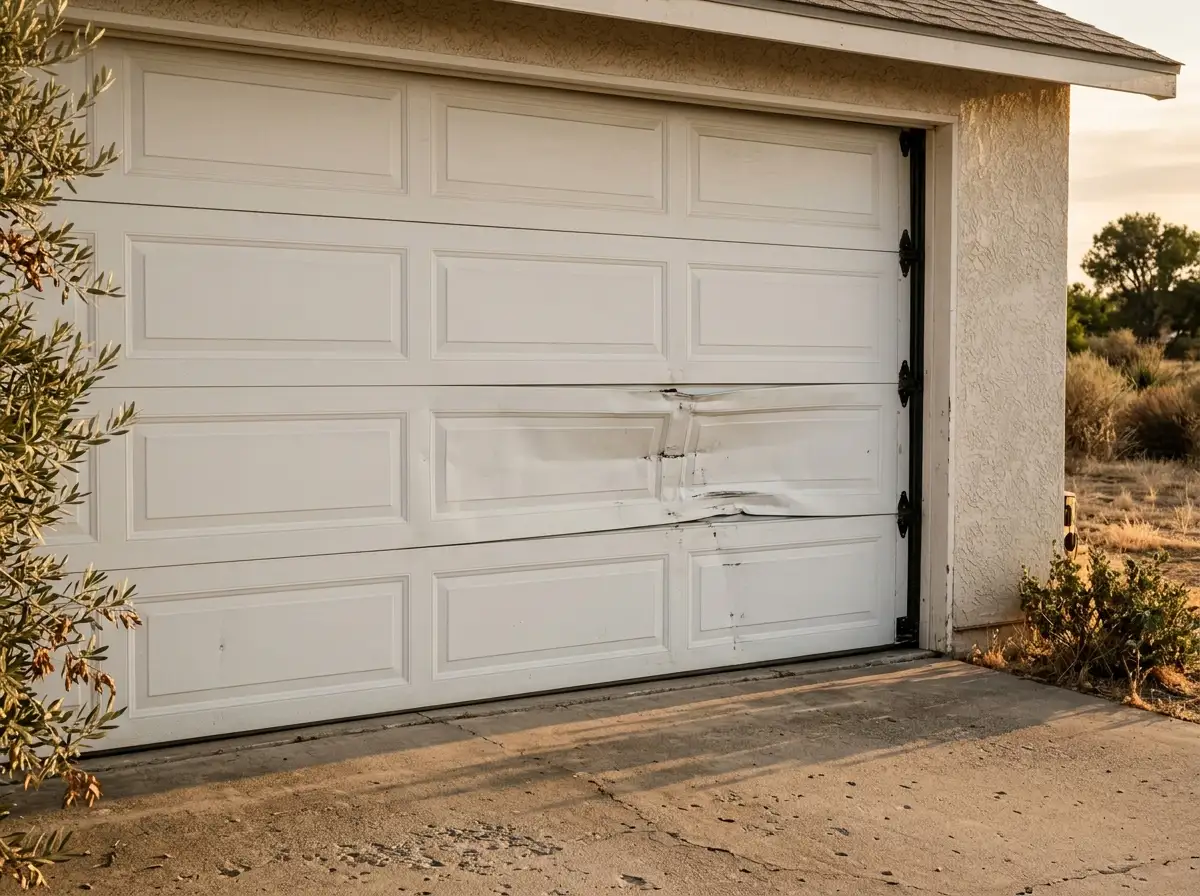
How many sections are damaged? If the answer is one, and the door is not very old, a single section can usually be swapped and the door kept. Garage door panel replacement in Sacramento comes down to that count, the age of the door and whether its maker still builds the model.
One section or a new door: how the decision is made
A single damaged section on a sound, current door is replaced, while two or more usually tip the sums toward a new door.
| Situation | What usually makes sense |
|---|---|
| One section dented or creased, model still made | Replace the section |
| One section damaged, model discontinued | A new door, unless a matching section can be found |
| Two or more sections damaged | Price both. Several sections often cost close to a whole door |
| An old door with faded paint and worn hardware | Lean toward a new door, since both remain after the swap |
| Wood door with rot in the bottom rail | New section if the rest is dry and solid, new door if rot has spread |
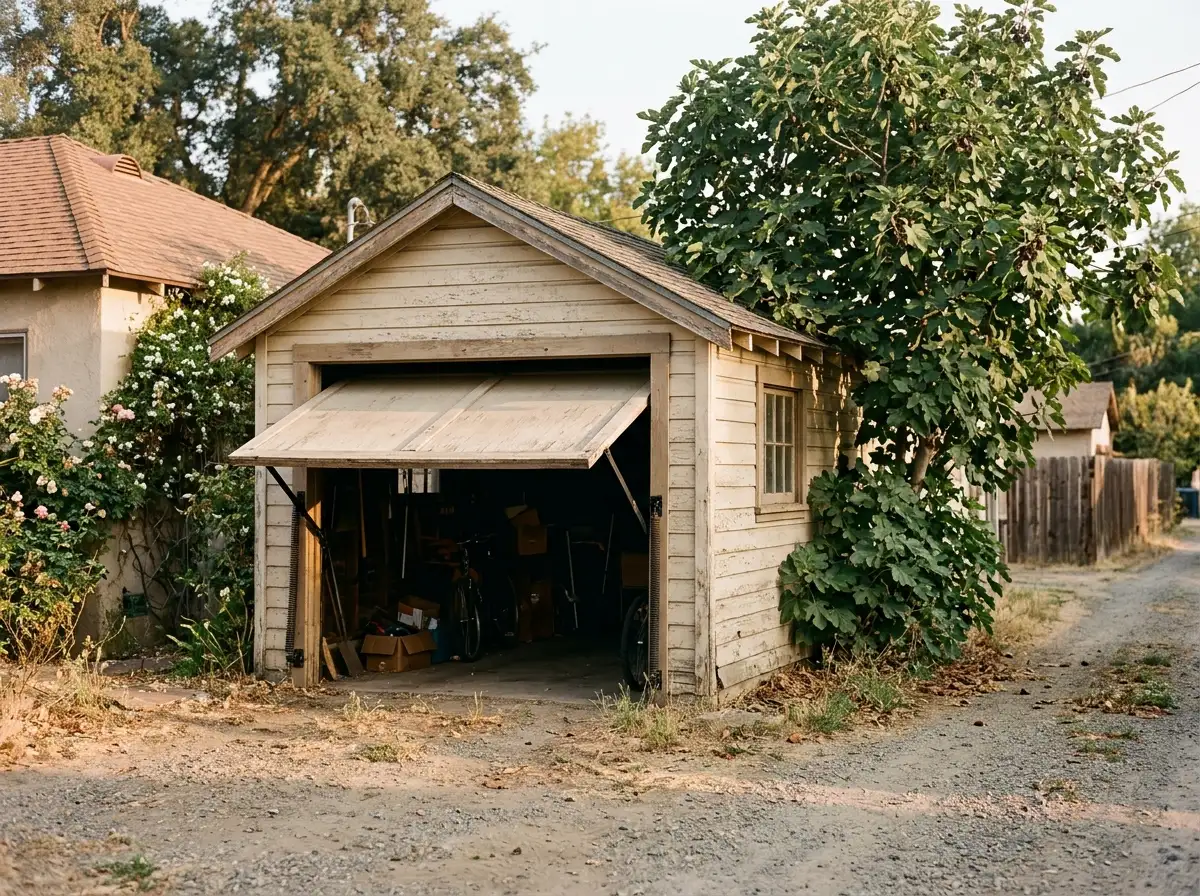
| One-piece door that swings up | No sections to swap. See tilt-up door repair |
“Panel” and “section” mean the same thing here: one of the four or five horizontal slabs, hinged together, that make up the door. When the answer is a whole door, the installation page covers the choices.
Why a dent matters to the springs and the opener
A creased section changes how the whole door moves, so the damage is mechanical as well as cosmetic.
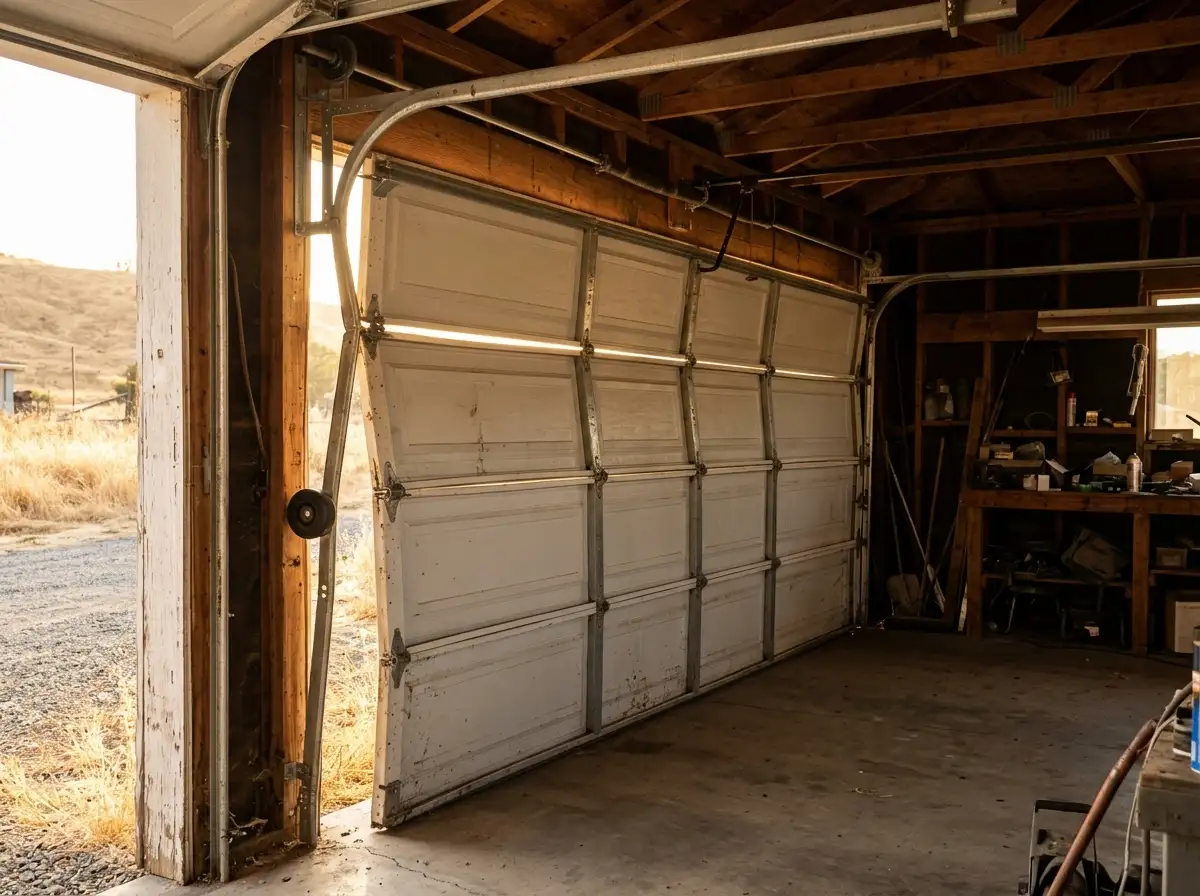
Each section is a shallow steel box, stiff because it is flat. The hinges that join it to its neighbors and carry the rollers are screwed into its ends and its center uprights. Put a fold across it and it bends at the fold each time the door rounds the curve of the track.
A bent section sits unevenly against the rollers, so the door drags. The springs were sized for a door that moves freely, and the opener now has to supply the difference. That is how an unrepaired dent can end up as a stripped opener gear later on.
If the door was just hit. Do not force it up or down to see whether it still works. A hard bump often bends the track or knocks a roller out at the same time, and running the door spreads the damage to sections that were fine. Have the track checked along with the section.
What to have ready so the section can be matched
Four details identify a section, and having them on the first call saves a second visit.
- The brand. The maker’s name is usually on a sticker inside the door or stamped into the hardware.
- The model sticker. Look on the inside face or the end of a section for a label with a model or serial number.
- The size. The width of the door and the height of the damaged section. Sections come in more than one height, and a door mixes them to reach its full height.
- The color and finish. The factory color name if you know it, and whether the surface is smooth or wood-grain.
It also helps to say which section it is, counting from the floor.
The bottom one carries the cable brackets and the rubber seal. The top one carries the opener arm. The ones between are the simplest to change.
Clear photographs of the inside and outside do the job if the sticker is missing. Windows, insulation and the pattern pressed into the steel all have to match too.
Why a new section never quite matches an old door
A replacement comes in the factory color, and your door stopped being that color years ago.
Sun breaks down the surface of the paint, so it lightens and goes chalky. A door facing west or south takes the worst of it. The new section is the right color by the code and still stands out as a brighter stripe across the door.
There are three honest answers to that. On a young door the difference is slight and fades in with time.
On an older steel door, painting the whole face after the swap evens it out. And if a mismatch would bother you every time you pull into the driveway, that is a fair reason to price a new door.
The cracked top section, and the strut that was missing
A top section that has cracked or buckled where the opener arm attaches was pushed and pulled without enough reinforcement.
The opener moves the door by one arm fixed to the center of the top section. Thin steel cannot take that load alone on a wide door. It needs a strut, a steel brace running the full width across the back.
Without one, the section flexes a little on every cycle until the steel cracks around the bracket. Swapping the section alone gives you the same crack a few years on. The proper repair is a new section with a strut, or a strut and a reinforcing bracket if the old section is still usable.
Wood sections that swell, split and rot
Wood sections fail from water, and almost always from the bottom up.
A wood door is made of rails, stiles and thin panels held in grooves. The bottom rail sits closest to the wet ground and splashing rain. Once the paint or stain breaks at a joint, the end grain takes on water and swells, and the door starts to stick or drag.
Then summer dries the wood hard and it shrinks. A few rounds of that open the joints and split the thin panels. Rot follows where water sits.
One rotted section in a solid wood door can be rebuilt or replaced, and it needs sealing on all six sides before it goes in. Wood is heavy, so the springs have to be checked against the finished weight.
How a section is swapped
The work is done with the door closed and the spring load dealt with first.
- Identifies the door. Brand, model, size and color are confirmed and the section is ordered.
- Secures the door and disconnects the opener. The door is clamped so it cannot move.
- Releases the spring tension where the job needs it. A bottom section holds the cable brackets, so the springs are unloaded before it is touched.
- Removes the hinges and rollers on the damaged section and lifts it out.
- Fits the new section, moves the hardware across, and replaces bent hinges or worn rollers instead of reusing them.
- Adds a strut if the section needs one.
- Rebalances and tests. A new section can weigh more or less than the old one, so the spring tension is reset until the door stays where it is put.
What panel replacement costs
The section sets most of the price, and sections vary widely. Fixr’s national guide puts garage door panel replacement at $150 to $1,000 and panel repair at $150 to $500. HomeGuide’s 2026 guide gives $300 to $900 or more per panel, and $400 to $1,000 or more for the single panel of a tilt-up door.
For comparison, the same HomeGuide page lists a new single door at $700 to $2,700 installed and a double at $1,000 to $3,500. That overlap is why two damaged sections are priced both ways. None of these are our figures: the technician quotes after seeing the door.
What moves the number is the width of the door, insulation, windows, wood or a special finish, and added struts or hardware. The repair cost guide sets panel work beside other repairs.
What a poor section swap looks like
Most trouble comes from a near match being treated as a match.
- A step or gap between sections means the profile or thickness is slightly different, and the joint will leak air and rain.
- A door that is suddenly heavy or drifts upward was not rebalanced after the weight changed.
- Bent hinges put back on pull the rollers out of line and wear the track.
- A new top section with no strut is the old failure waiting to repeat.
Looking after the sections you have
Sections last when they stay painted, dry and free of load they were not built for.
Wash a steel door once or twice a year and touch up scratches before they rust. Keep the bottom edge of a wood door sealed and repaint it when the finish dulls. If the door feels heavy or the opener labors, have the balance checked, because a struggling opener takes it out on the top section.
Sun, wet winters and appearance rules in Sacramento
Local weather and local rules both affect the match. The city records about 3,600 hours of sunshine a year and, on average, 76 days at 90 degrees or above, so a door that faces the afternoon sun fades quickly. Rain between November and April, with fog in December and January, is what wood sections soak up before summer dries them.
Appearance rules can decide the finish for you. Sun City Lincoln Hills in Lincoln requires a replacement to be painted to match the color its review committee or the developer originally approved. The city’s plan for the Eichler historic district in South Land Park Hills calls for flat or vertical-groove doors and rules out raised-panel styles facing the street.
If your home is a landmark or sits in a historic district, ask the city’s preservation staff before a section is ordered. The same goes for association rules in Rocklin, Folsom or anywhere else a committee has a say.