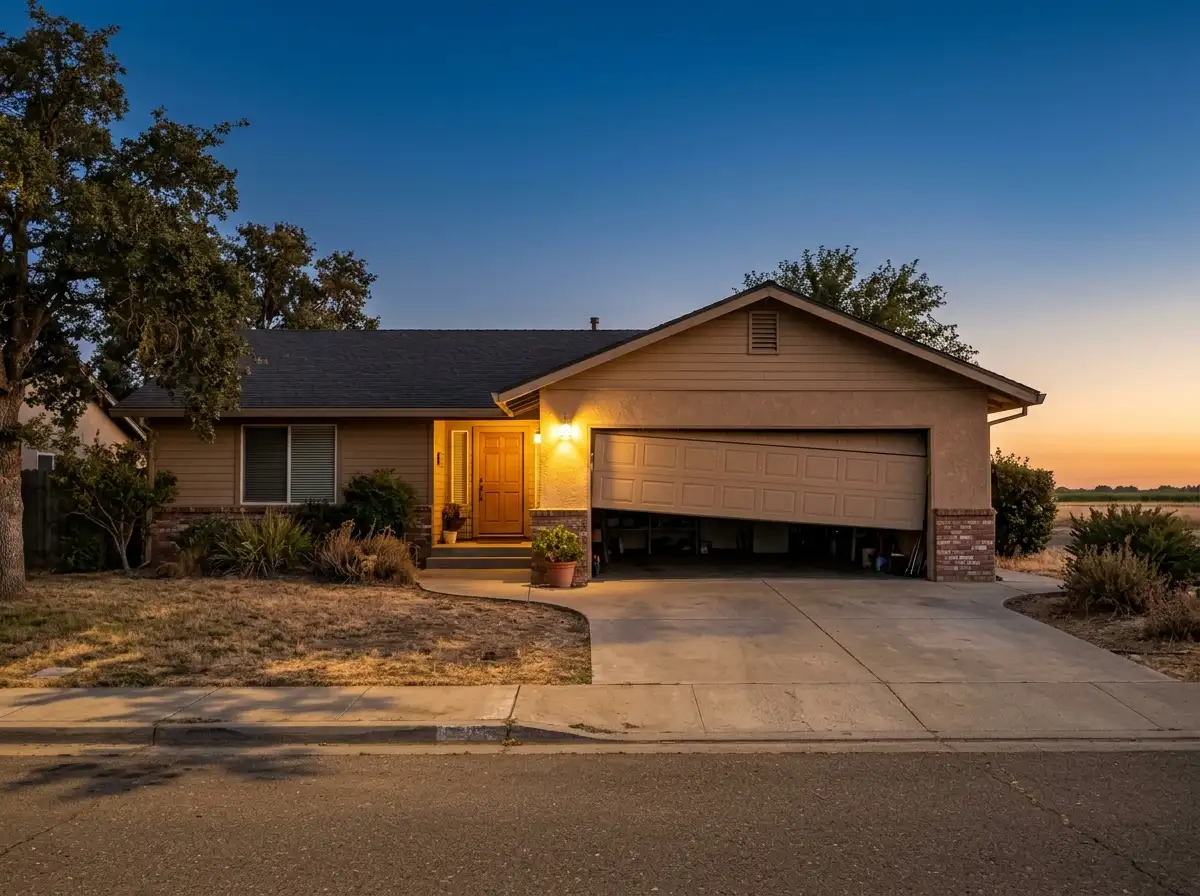
What did you hear? If the answer is a bang like something heavy falling in the garage, and the door now rises a few inches and gives up, a spring has broken. Garage door spring repair in Sacramento is one of the most common urgent door repairs, and it is usually finished in one visit.
What a broken spring looks and sounds like
The sound comes first, and it is usually mistaken for a break-in or a shelf collapsing. After that, the signs are consistent:
- The door lifts a hand’s width and stops, or the opener hums and strains without moving it.
- Lifted by hand, the door feels like it has been bolted to the floor.
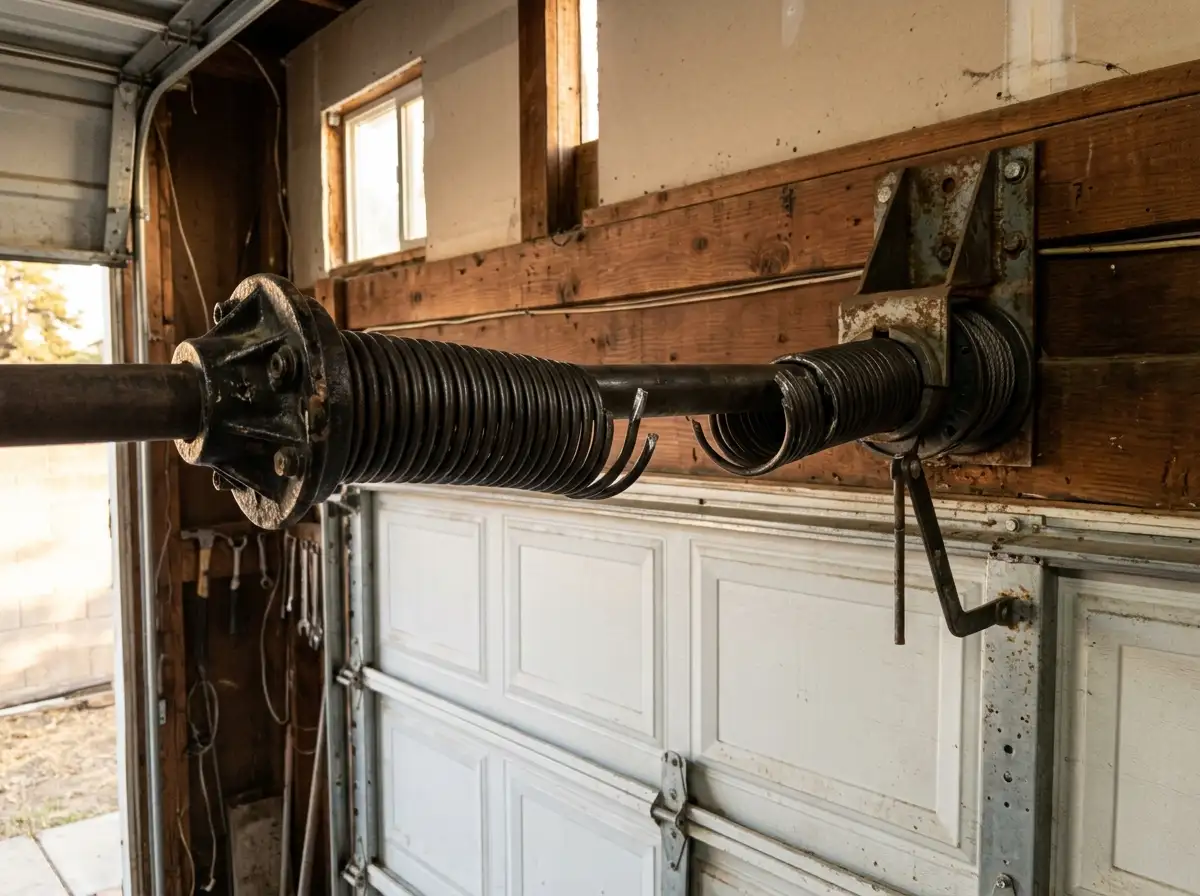
- Above the door, the long coil on the steel bar has a gap of an inch or two in it.
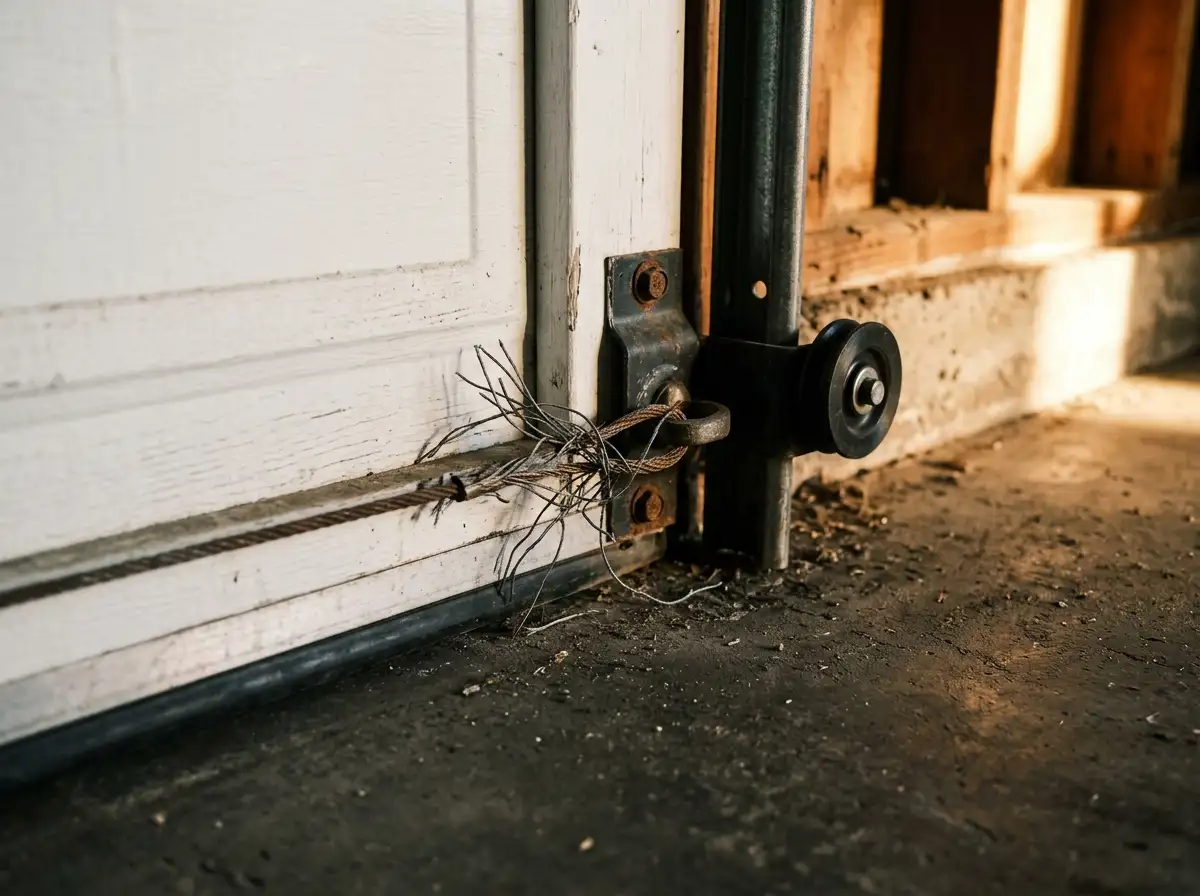
- On older doors with springs along the side tracks, one spring hangs slack or a cable droops.
- A door that was open when it happened comes down fast and hard.
Any one of these is enough. You do not need to confirm it by testing the door again.
What to do in the next five minutes
Leave the door closed and stop pressing the button. Everything else can wait for the technician.
Three things not to do. Do not run the opener: it was built to guide a balanced door and will strip its gear or bend the top section trying to lift a dead weight. Do not pull the red release cord if the door is open at all, because the spring was the only thing holding it up. Do not try to lift it alone.
If the door is stuck open, keep children, pets and cars out from under it and call. If a car is trapped inside, say so at the start of the call.
How one spring holds up a door that weighs hundreds of pounds
A spring is a way of storing the door’s weight. Understanding that makes the rest of the repair make sense.
On most doors the spring is a torsion spring: a thick coil wrapped around a steel shaft above the opening. When the door closes, cables at each side turn the shaft and twist the coil tighter. That twist is stored energy.
When you open the door, the coil unwinds and hands the energy back, so you or the opener only supply the last few pounds.
Older and lighter doors use extension springs instead. These run along the horizontal tracks and stretch like a screen-door spring as the door comes down. Each one should have a safety cable running through it, so a broken spring stays where it is, and many old doors lack one.
One-piece doors use a heavier version mounted at the sides. If yours is a single slab that swings outward, the tilt-up door page covers those.
Why springs break, and why it is often on a cold morning
Springs do not wear out gradually. They work perfectly until the steel cracks.
Every open and close flexes the metal once. After enough flexes, a hairline crack forms and the coil parts.
A builder-grade spring is rated for around 10,000 of those cycles. Three things bring the day forward:
- Use. A family that comes and goes through the garage can put eight or ten cycles on a spring every day.
- Cold. Steel is more brittle when it is cold, so a spring that is nearly finished tends to let go on the first chilly nights of the year.
- Rust. Damp air leaves a film of rust between the coils, and the coils then grind against each other on every cycle.
What the technician does, in order
A proper spring job ends with a door you can lift with one hand. Anything less is unfinished.
- Measures the old spring and weighs up the door. Wire thickness, coil diameter, length and wind direction all have to match the door’s weight and height.
- Takes the load off. Whatever tension is left is released with winding bars and the broken spring comes off the shaft.
- Fits the new spring or pair. The cables, the drums and the bearings the shaft turns in are checked at the same time, and worn ones are replaced.
- Winds the spring. Steel winding bars put in the number of turns the door calls for, a quarter turn at a time.
- Runs the balance test. With the opener disconnected, the door should stay put at waist height. If it drifts down or creeps up, the tension is adjusted.
- Reconnects the opener. Its limits are reset and the door is checked to make sure it reverses when it meets an obstruction.
The price comes before step two. You hear what the door needs and what it costs, and you decide.
Standard or high-cycle, one spring or two
You will usually be offered a choice, and it comes down to how much you use the door.
| Option | What it is | Who it suits |
|---|---|---|
| Standard spring | Rated near 10,000 cycles | A door opened a few times a day |
| High-cycle spring | Thicker wire and a longer coil, rated 25,000 cycles or more | Households that use the garage as the main entrance |
| Replacing the pair | Both springs changed in one visit | Almost every two-spring door, since both have the same wear |
| Converting one spring to two | A second spring added to a heavy door | Wide or insulated doors that were under-sprung by the builder |
What a spring replacement costs
The price follows the spring, and the spring follows the door. Fixr, a national cost guide updated January 31, 2025, puts a pair of torsion springs at $200 to $350 and a pair of extension springs at $120 to $250. HomeGuide’s 2026 guide gives $150 to $350 for both torsion springs.
Those are published national ranges, not our prices. The technician gives you the real figure after seeing the door, and that estimate is free.
What moves it: a heavy wood or insulated door needs a bigger spring, high-cycle springs cost more than standard ones, a night or weekend visit usually adds to the bill, and worn cables or bearings found during the job are extra parts. Our guide to spring replacement cost breaks each of these down.
How a spring job goes wrong
Most bad spring work comes from the wrong part or a skipped test. Knowing the signs lets you judge anyone’s work.
- A door that slams shut or drifts open was fitted with a spring that is too weak or too strong for it.
- An opener that sounds strained afterward is lifting weight the spring should be carrying, and it will fail early.
- A door that sits crooked means a cable was not seated on its drum when the shaft was reassembled.
- No balance test means nobody checked. Ask to see the door hold at waist height before the technician leaves.
Getting more years from the next set
You cannot stop a spring wearing, but you can stop it wearing early.
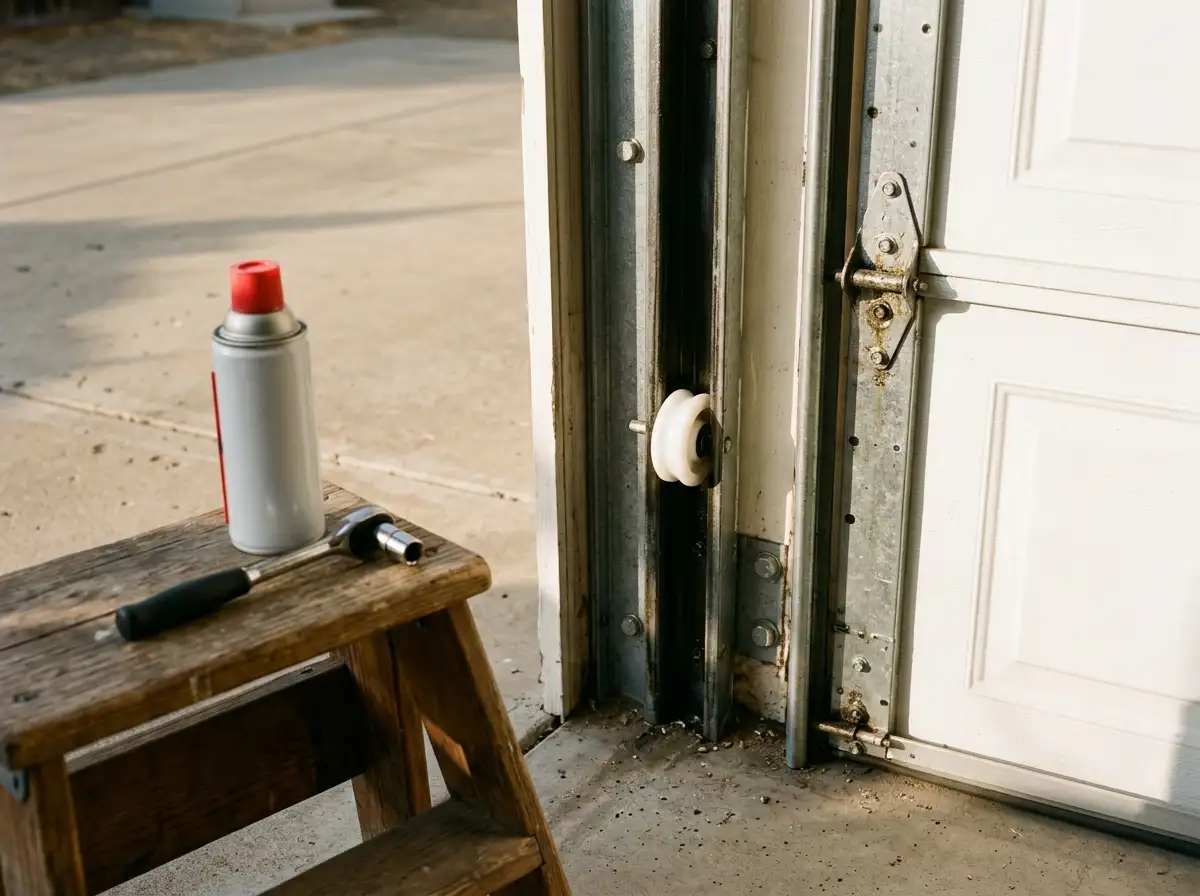
Spray the coil lightly with a garage-door lubricant twice a year, which keeps rust from forming between the turns. Have the balance checked once a year as part of a tune-up. And if the door starts to feel heavy or the opener sounds like it is working harder, call before the spring finishes the job on its own.
Broken springs in Sacramento homes
Two things about this area bear on springs. The first is the swing in temperature: a normal July afternoon and the night that follows are about 30 degrees apart, and winter brings frosty mornings after long hot summers.
The second is that so many homes were built at once. In Natomas, Elk Grove and Lincoln, a large share of the houses went up in the 2000s. Their original springs are the same age, so they reach their rated life in the same few years.
A door stuck open with a broken spring is its own problem. The emergency repair page says what is safe to touch while you wait, and the Rancho Cordova page covers the side springs found on older doors.